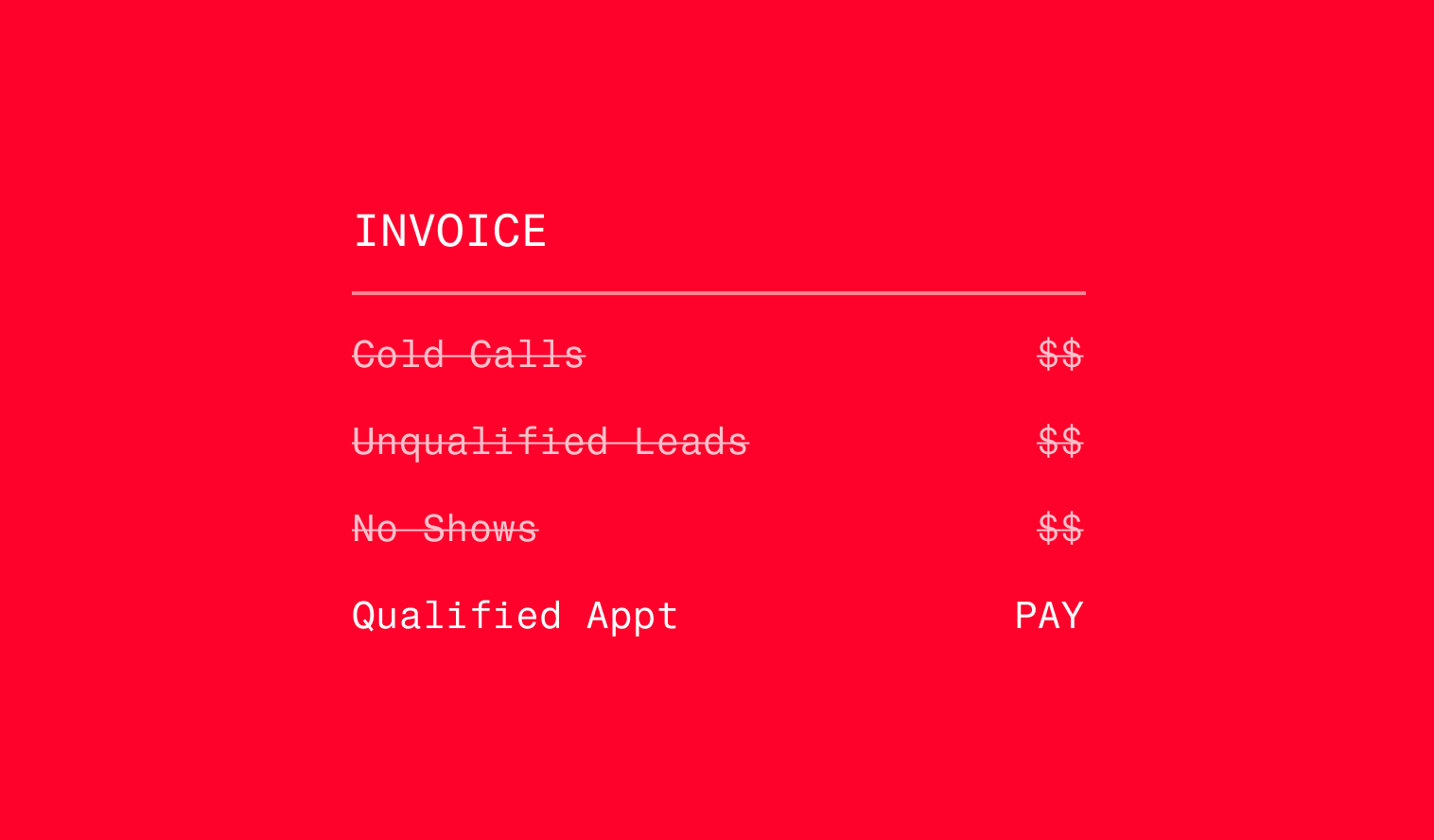
How SPIN Selling Transformed Our B2B Sales Process
Neil Rackham analyzed more than 35,000 sales calls over 12 years and found something that still surprises most reps: the most successful salespeople asked more questions, especially about the implications of a buyer's problem, instead of pitching features. His research became the SPIN Selling framework, and it's still the foundation we use to run discovery and qualify prospects before a meeting ever gets booked.
This article covers how SPIN selling changed our sales process at Key Outreach: the actual questions and stages we run on every call, not the textbook version, plus what changed once we stopped pitching and started asking.
In this piece, we cover:
- The four SPIN stages, mapped to real question examples you can use on your next call
- How each stage moves a prospect from "just looking" to ready to commit
- What structured discovery does to meeting quality and close rates, with the proof behind it
P.S. We run this exact questioning framework inside our own outbound and discovery calls every day. If you'd rather see it in action than build it yourself, book a call and we'll show you how it works.
TL;DR
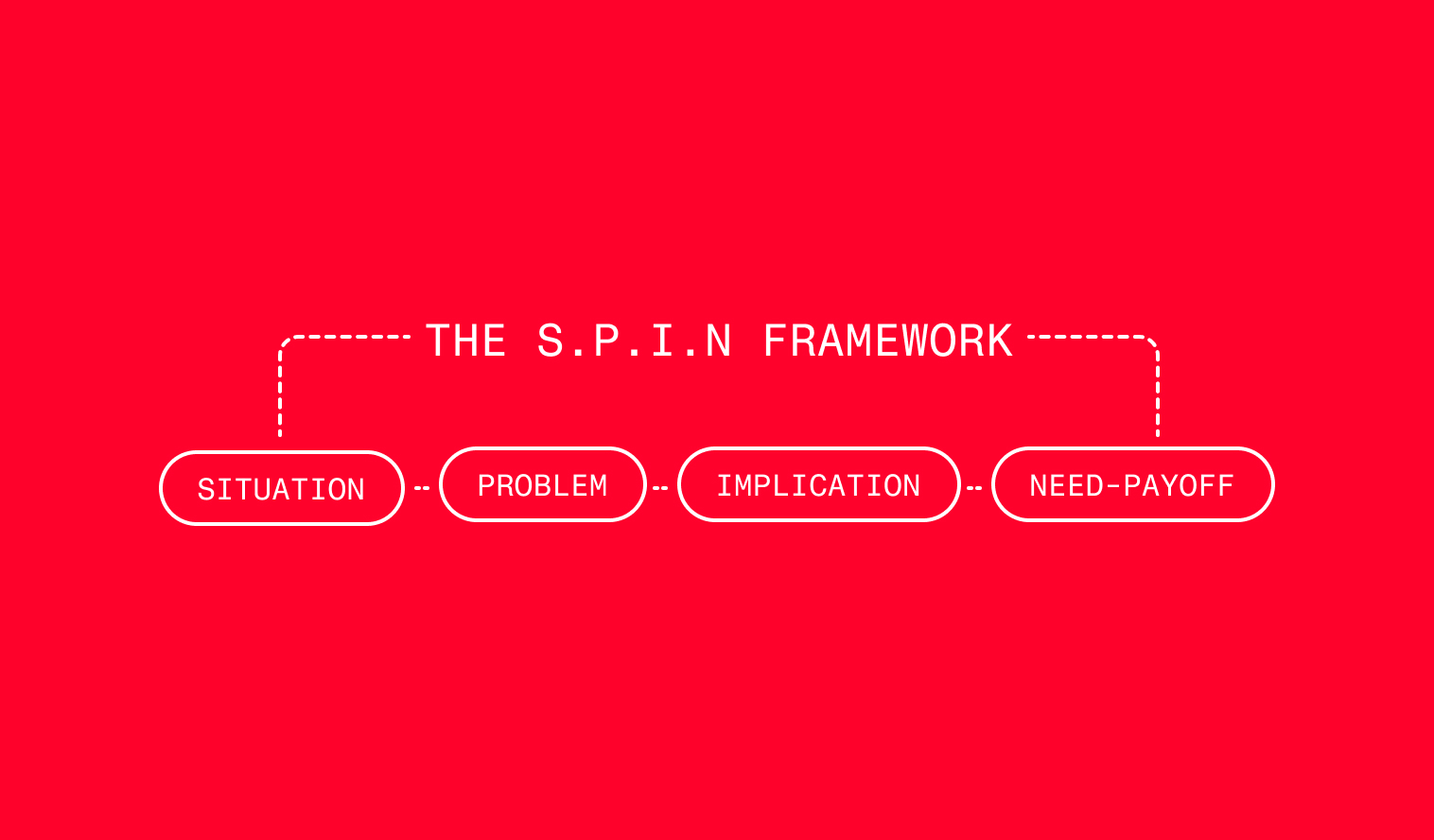
- SPIN stands for Situation, Problem, Implication, and Need-Payoff: four question types mapped to four sales stages (Opening, Investigating, Demonstrating Capability, Obtaining Commitment).
- Rackham's original research covered 35,000+ sales calls; it's still the framework Salesforce, Highspot, and most B2B sales resources point back to today.
- We use SPIN questioning inside outbound conversations and discovery calls to qualify prospects before a meeting lands on a closer's calendar.
- Implication questions, not situation questions, do the heavy lifting in longer, multi-stakeholder B2B deals: they're what turns a mild pain point into an urgent problem.
- Structured discovery compounds: prospects qualified before the pitch arrive ready to talk about solving a real problem.
What is SPIN selling?
SPIN selling is a consultative sales methodology from Neil Rackham's 1988 book SPIN Selling. It's built around asking specific questions to understand a prospect's needs before proposing a solution, instead of leading with a pitch. The acronym stands for the four question types reps ask on the way to a close.
Using SPIN as our foundation, we've closed more deals and built longer client relationships in the process, since the framework puts the prospect's problem in front of the product every time. Here's what SPIN represents:
- Situation questions
- Problem questions
- Implication questions
- Need-payoff questions
Each question type maps naturally onto one stage of a sales call. (In Rackham's book, all four question types belong to the Investigating stage; the stage mapping below is our practical adaptation.) Working through all four, in order, is what gets a prospect from first conversation to closed deal and long-term partner.
Situation questions and the opening stage
The opening stage is about learning, not selling. We use situation questions to understand a prospect's current setup, tools, and process before we say a word about what we do. Rushing this stage is the fastest way to sound like every other cold email in someone's inbox. Good open-ended sales questions keep it feeling like a conversation instead of a survey.
Whether we're talking to a new prospect or checking in with an existing client about their pipeline, situation questions give us the context we need to make everything that follows relevant. Examples we use:
- Why does your company take this approach?
- What tools do you use to support [task]?
- How often do you use your tools?
Problem questions and the investigating stage
Problem questions pinpoint the pain points and difficulties a prospect actually faces, and this is where most B2B conversations should spend the bulk of their time. Most companies come to us because they're struggling to find the right contacts, or they don't have the internal bandwidth or expertise to run outsourced B2B lead generation at scale.
Before we ever talk about our service, we make sure we're addressing the right problem.
Examples we ask:
- How time-consuming is it to prospect?
- What's the biggest challenge your organization faces with [task]?
- What is your biggest day-to-day challenge?
Implication questions and the demonstrating capabilities stage
By this point we've built a real relationship, and implication questions let the prospect voice their frustrations in their own words while we listen. When it's our turn to talk, we can speak directly to each pain point they raised, which makes for a very different conversation than a generic pitch.
Say a prospect mentions their team wastes hours a week hunting for the right email address. That's our cue to explain how we approach B2B prospecting by building fresh, targeted contact lists weekly rather than working from static, aging data.
Examples we use:
- If you had more resources, what could you accomplish?
- How is [problem] affecting your work?
- Does [problem] ever keep you from reaching your business goals?
Need-payoff questions and the obtaining commitment stage
This is the closing stage, where need-payoff questions ask a prospect how important it actually is for them to solve the problem they just described. Rather than pitching, we reflect their own words back with a solution attached.
This is also where proof matters most. Instead of vague promises, we point to documented results: we've booked 30,000+ meetings and influenced $170M+ in revenue since 2015, with individual case studies ranging from 2x to 31x ROI. When a prospect connects their own stated problem to that kind of outcome, closing becomes straightforward.
Examples we ask:
- How would it be easier to solve [problem] with our solution?
- Would our solution make it easier to reach your business goals?
- What would achieving [task] do for your business?
Once a prospect becomes a client, we use this stage to reflect on what went well, sharpen the next conversation, and celebrate the win.
How SPIN selling improved our sales process at Key Outreach
SPIN selling changed what our discovery calls are for, not just how we talk to prospects. Instead of one-sided pitches, every conversation is built to surface a real problem before we describe our system, so the meetings that do get booked are already qualified. Discovery is the step that moves someone from lead to prospect to sales opportunity.
That discipline mirrors how we run outbound for clients. The problem is usually founder-led prospecting or an over-reliance on referrals and inbound leads. The service is a fully-managed outbound system covering infrastructure, list building, copywriting, and meeting booking. The verified benefit shows up in case studies like Remix Logistics (100+ meetings, 23x ROI, $500K+ in revenue) and NEWMEDIA.COM (65+ meetings, 31x ROI).
SPIN selling remains the foundation of our sales strategy today, shaping how we craft questions and keep the prospect at the center of every interaction instead of running a one-sided pitch. It's also why we retain clients year after year, pairing quality meetings with decision-makers with a process that earns the close.
Why SPIN Selling Still Drives Key Outreach
SPIN selling works because it puts the prospect's problem ahead of the pitch. Pair that discipline with a managed outbound system, and qualified meetings, and closed deals, tend to follow.
Key Takeaways
- SPIN stands for Situation, Problem, Implication, and Need-Payoff, mapped to four sales stages: Opening, Investigating, Demonstrating Capability, and Obtaining Commitment.
- Implication questions carry the most weight in B2B deals. They connect a stated problem to real business cost, which is what earns urgency.
- We apply SPIN inside our own discovery calls, and client case studies from managed outbound programs range from 2x to 31x ROI.
- Structured discovery isn't a script. It's a repeatable system, and it's why we've booked 30,000+ meetings and influenced $170M+ in revenue since 2015.
P.S. If you'd rather see this questioning framework running inside a managed outbound program than build it from scratch, book a call with our team and we'll walk you through it.
Frequently asked questions
Is SPIN selling still relevant for B2B sales?
Yes, SPIN selling remains one of the most cited B2B sales methodologies because it focuses on real buyer needs instead of scripted pitches. It works especially well in complex, multi-stakeholder deals where trust and relevance matter more than a fast pitch.
How do I implement SPIN selling on my team?
Start by mapping the four SPIN question types to your existing discovery process instead of overhauling it. Coach reps to ask situation and problem questions early, then build toward implication and need-payoff as the relationship develops. No new playbook required, just the steady call coaching that comes with being an effective sales manager.
Can SPIN selling be combined with other sales frameworks?
Yes. SPIN selling pairs well with frameworks like Challenger Sales or MEDDPICC, as long as discovery questions stay focused on the buyer's actual situation. It strengthens other methodologies by putting insight ahead of the pitch.
What's the biggest mistake teams make with SPIN selling?
Skipping implication questions and jumping straight to a pitch. Without connecting a prospect's problem to its real business cost, reps lose credibility and struggle to get commitment. That's exactly where how SPIN selling improved our sales process at Key Outreach made the biggest difference.
Does SPIN selling actually increase close rates?
It improves qualification, which improves close rates downstream. When discovery surfaces a real, costed problem before the pitch, prospects arrive at the need-payoff stage having already sold themselves.